World Sjogren’s Day – Saturday July 23rd!

In an effort to increase local awareness of Sjogren’s among medical professionals in my own community, I prepared the following letter which I plan to deliver next week to local physicians, dentists, nurse practitioners, and optometrists. If you have Sjogren’s and would like to copy and paste any portion of this letter for similar purposes please do so. Thank you to Dr. S. Schafer for permission to use her statistics re: Breast Cancer, and the story comparing them to Sjogren’s at her medical presentation.

Dear Medical Professionals:

Saturday, July 23rd was World Sjogren’s Day, a day set aside to promote awareness of Sjogren’s Syndrome. I was diagnosed with Sjogren’s in 2002. The typical responses I have heard from medical professionals when I tell them I have Sjogren’s have been:

“I have never heard of that, what is it?”

“Show what? Can you spell it so I can do a search?”

“Oh that’s nothing; it’s just dry eyes and dry mouth.”

“Venus Williams has that, right? She still plays competitive tennis so it’s not that bad.”

Though Sjogren’s is one of the most commonly occurring connective tissue autoimmune diseases it gets little mention in medical school lecture theatres. It is rarely diagnosed until several years, sometimes decades, after onset. Sjogren’s , like Lupus, can present with a myriad of symptoms varying from patient to patient, eluding even the most skilled diagnostician. Blood tests for antibodies do not always come back positive especially in early stages of the disease.

As a physician who has Sjogren’s herself was prepping for her most recent Sjogren’s presentation for medical residents, she ran across breast cancer stats. In the US, the 2016 estimate of patients living with breast cancer or a history of breast cancer is 2.8 million. People diagnosed with Sjogren’s are estimated at 3-4 million plus. Both diseases mostly (but not 100 percent) impact women. Both have overall survival rate of approximately 90 percent, or on the other side of the coin, 10 percent mortality directly from the disease. Apparently the medical residents were quite stunned to hear about these comparable statistics. However when it comes to public education and awareness, Sjogren’s lags far behind.

It is my hope you will take time to read through the enclosed information sheets provided by the Sjogren’s Foundation, sharing the facts about Sjogren’s with your colleagues and staff.

If you would like to read a medical text about the diagnosis and treatment of Sjogren’s, I would recommend “The Sjogren’s Book – 4th edition” edited by Daniel J. Wallace, MD.

To find out more about the recent development and dissemination of the first USA Clinical Practice Guidelines for Sjögren’s, contact the SSF office at 1-800-475-6473 or visit their website: http://www.sjogrens.org

If you are curious about my personal experience with Sjogren’s, along with several related diagnoses that followed, please feel free to contact me at xxx-xxx-xxxx or via e-mail: suemw3@mail.com, or visit my blog: http://www.wantonwordflirt.com and click on “Sjogren’s”.  I welcome discussion, feedback or questions from medical professionals or patients – let’s learn together.

Thank you.
Suzanne

P.S. Why July 23rd? World Sjögren’s Day was created to commemorate the birthday of Dr. Henrik Sjögren, the Swedish ophthalmologist who discovered Sjögren’s in 1933.

Sjogrens Fact Sheet


My Mom’s Surprising Diagnosis

Today is the last day of Celiac Disease awareness month. Though I have known of celiac disease for most of my life, it was only recently and unexpectedly a family member was diagnosed. Celiac Disease is yet another condition in the huge family of autoimmune diseases, one that many people consider rare though it is more common than people suspect. Like a host of other autoimmune disorders it is not always diagnosed expediently.

Celiac disease is not to be confused with gluten-sensitivity, or choosing to eat gluten-free as a lifestyle choice. Not adhering to a strict Celiac diet can result in life-threatening consequences for an individual diagnosed. Even a few molecules of gluten can cause harm to a person with Celiac Disease. Yes, I do mean a few molecules!

My Mom was recently diagnosed with Celiac Disease at the age of 75! Yes, 75. In hindsight she probably had it for years, possibly decades yet neither she nor any of her doctors suspected she might have it. Her diagnosis came somewhat by chance, through a series of circumstances that thankfully provided her with the opportunity for testing.

IMG_1157
(Mom and I – Christmas 2015)

Almost two years ago Mom had a FIT screening (a test which looks for fecal blood) which came back positive. Though she did not verbalize it, I am sure like everyone else who receives such a result she thought “oh no, colon cancer”. The fact she comes from as she calls it “a cancer family” did nothing to alleviate her fears. Once she told me about it, I reassured her it was possibly a false positive result. I also reminded her the test was a screening tool, and not necessarily an indicator of a serious issue. She was aware she would need a colonoscopy to follow-up on the test. Something she absolutely was not enchanted with.

I had recently had a colonoscopy done myself, by a local doctor who now only does gastroenterology scopes. Other than the prep which involves doing the Mexican two-step back and forth to the toilet all evening and night before the procedure, I assured her the procedure itself was a breeze. I remember her sarcastic reply of “Yah, sure.” I insisted I was not lying and explained she would not require general anesthetic rather she would receive efficient new sedation drugs that would have her feeling like she went out and back awake in seconds, with no nausea of the type she was prone to from anesthetic in the past. I told her to request the same doctor as I had since I had such a good experience, so she did.

Besides the FIT screening, the other reason for Mom’s concern was that she had begun to have more and more frequent bowel troubles. Often waking very early in the morning to have to have what she refers to as an “evacuation”. Sometimes this would occur days in a row with no seeming cause such as a flu virus, food borne illness or food poisoning. Naturally she became more and more vigilant about what she was eating. She started to have an aversion to travelling very far or in early mornings if no comfortable washroom available on route.

I had discussed my Mom’s on-going issues with a friend at yoga who eats gluten and dairy-free. She told me that I must tell my Mom to have her doctor check her for celiac disease. I assured her I would. Mom did ask her doctor about it and he said “No, you do NOT have Celiac Disease”. And if I recall correctly he also said he didn’t think she had it because she was not “malnourished”. My Mom has never been overweight, or underweight, always a normal healthy weight. Her diet also exemplary.

So Mom did have her colonoscopy. Immediately afterwards the gastro doc came to speak to us and he told her the bowel looked fine, no appearance of cancer. There was no visible reason in her bowel for her frequent trips to the bathroom. He then told her that she should be checked for Celiac Disease with the screening blood test called tTG-IgA. He explained that if that test came back positive, she would require an upper scope at which time small biopsies would be taken to determine a definitive diagnosis. He emphasized she must continue to eat gluten until both the blood test and scope / biopsies were done.

Imagine my Mom’s surprise when the blood test didn’t just come back positive, but extremely high positive. It was multiples and multiples beyond a normal result,approximately 100x greater than a negative value.There was little question that Celiac Disease was the reason for my Mom’s increasing digestive distress. Negative is less than 4, 4-10 is a weak positive, and greater than 10 is positive.

So, Mom returned to the hospital where I live to see the same Gastro doc again for an upper scope and the biopsy of small intestine. When she woke up, the doc came to her bedside with photos showing the damage to the villi in her small intestine. Celiac disease damage was evident in her small intestine, biopsy results later confirmed it for certain.

On the way back to my house we stopped at the store to buy some gluten-free items and Mom began eating gluten-free that very day. Within mere days she noticed a difference in how she felt and the frequency of her pre-dawn bathroom trips diminished. There is no cure for Celiac Disease but with vigilance to a gluten-free diet it can be controlled. There have been times when she has had recurrences of her intestinal distress, which she chalks up to eating something possibly contaminated with or unknowingly containing gluten, but overall she is vastly improved.

Ironically over the years my parents traveled to many countries overseas, with my Mom vigilant about what she ate. She would be frustrated as she was always the one who was careful not to eat fruits, vegetables, and especially anything uncooked such as salads that could be contaminated. She watched others eat everything in sight, while she ate her “safe” foods – breads and pastas – hoping to avoid emergency bathroom trips while on bus, car, or river cruise excursions. How ironic she said she was actually against her knowledge eating the absolutely worst foods for her body.

Mom is also a phenomenal bread maker and once she retired she made all her bread homemade, rich in whole grains thinking she had improved her diet even more.

They say when you know better, you do better. My Mom sure has. I’d be lying if I said that she doesn’t miss some foods she used to love, but can no longer eat nor find comparable substitutes – such as her own whole-wheat flax bread or festive fruit bread. She has educated herself well from various sources, including becoming a member of the Canadian Celiac Association, and joining an on-line forum for individuals with Celiac Disease to share resources, information and support.

I certainly hope now that Mom’s doctor knows better he will do better too. He was taken aback by her diagnosis. Instead of Mom just being upset by his pronouncement that she absolutely did not have Celiac Disease, she took the opportunity to educate him bringing in a list of symptoms often experienced by those with Celiac Disease, with all the ones she experienced highlighted. Mom was diagnosed with osteoporosis years ago, which I had always found odd since she had always been active doing weight-bearing activities, and a consumer of dairy all her life. We will never know for sure but it could be a result of her being an undiagnosed Celiac, osteoporosis is but one symptom.

For more information on diagnosis, symptoms, and living with Celiac Disease seek out your local Celiac Associations or visit these links as a starting point:

http://www.mayomedicallaboratories.com/test-catalog/Clinical+and+Interpretive/82587

http://www.celiac.ca

http://www.hopkinsmedicine.org/healthlibrary/conditions/digestive_disorders/celiac_disease_85,P00361/

Remember if you believe you have Celiac Disease and your doctor does not believe it is possible, do not be afraid to educate yourself so you may have a more informed discussion, as well as the ability to advocate for yourself if need be. I wish you well.

Put On Purple today!

So, I was going to leave illnesses behind to blog about something completely unrelated to my medical adventures, but then I realized today is Lupus Awareness “Put On Purple” Day, so decided to post my POP selfie.

IMG_1512

Before I was diagnosed with Sjogren’s Syndrome, when I was trying everything I could think of (other than medication) to alleviate the myriad of muscle and joint aches I was suffering from, a physiotherapist suggested I ask my doctor to be checked for Lupus. I had asked before. I asked again. My doctor refused, saying I did not have Lupus or any other AI connective tissue disease. So I found a doctor who was willing to test for it.

I did test positive for the ANA blood test but not the anti-dsDNA antibodies for Lupus. A tiny percentage of people who do not have Lupus can test positive for ANA but most people who test positive do have Lupus. Symptoms have to be considered alongside blood work.

If you’d like to know more about the specific blood tests here is a reputable link: http://www.hopkinslupus.org/lupus-tests/lupus-blood-tests/

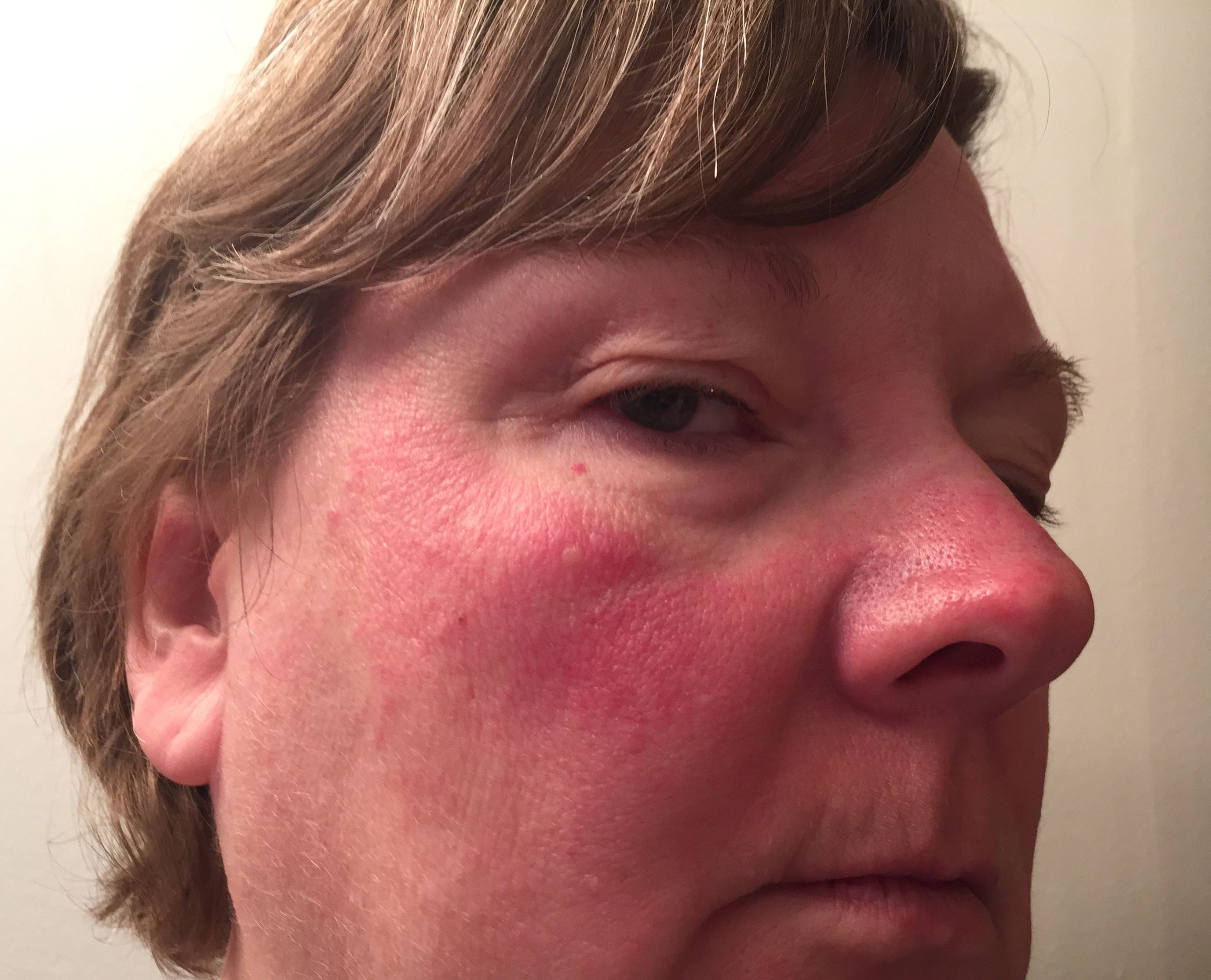
As I mentioned in earlier posts I did also test positive for the SS-A and SS-B antibodies specific for Sjogren’s. SS-A are related to sun sensitivity, so though I have had the definitive Lupus “malar rash” on my face in the past, some doctors felt it was due to the SS-A antibodies in combination with too much sun exposure, not due to Lupus.

It only takes mere minutes, even fifteen in direct summer sun for me to end up with a malar rash accompanied soon after by extreme fatigue. Some people think sun exposure for people with Lupus or SS-A antibodies of Sjogren’s is no big deal. They are wrong. Even minimal sun exposure can result in a systemic response, possibly even triggering an autoimmune attack on an individual’s organs such as kidneys, the brain, or lungs.

IMG_0292

The jury still seems to be out, no agreement between doctors thus far on my Lupus diagnosis. Although I do have other symptoms of Lupus, one doctor said I don’t have “full-blown” Lupus with “organ involvement”. and because I additionally have had skin manifestations of yet another autoimmune connective tissue disease – dermatomyositis – which affects the skin and underlying muscle tissue they are calling what I have “Undifferentiated Connective Tissue Disease”.

There is an accepted criteria for diagnosis of Lupus and a person must exhibit 4 of the 11 characteristics over time to be diagnosed, I have six. To learn more about the diagnostic criteria and symptoms visit your local Lupus organization website or click here:

http://www.lupus.org/answers/entry/lupus-diagnostic-criteria

The Undifferentiated Connective Tissue Disease diagnosis is on top of Sjogren’s and Autoimmune Hepatitis. With my body, the fun just never seems to end! Most of the people I know personally who have Sjogren’s also seem to be collecting other autoimmune conditions as time goes on.

We’d all prefer to collect something else. However it seems getting one AI connective tissue disease such as Lupus, is like getting one domino, soon you collect more to stack alongside, then from time to time, one gets pushed over toppling the others spinning you into a “flare” of one or more of your conditions, then possibly adding yet another.

Part of why Lupus and related conditions are so difficult to diagnose is every patient can present a different constellation of symptoms, and blood tests do not always give definitive answers. Awareness will help create quicker diagnosis times, expedite necessary treatment protocols, and hopefully lengthen life span while enabling higher quality of life as well.

Help spread the word and “Put On Purple”!

Oh no, here we go again!

It is now May 1st. Sjogren’s Awareness Month is over with for another year. I’m so relieved that I don’t have to think about it anymore!

Yes, of course I am being sarcastic. Anyone who suffers with a chronic illness is well “aware” of the effects of the illness every month, week, day, and sometimes minute of the year. It is not just Sjogren’s patients who have to live with on-going symptoms, but many people who have autoimmune and other illnesses.

Type 1 diabetics cannot just “let it go” and not think about their bodies, symptoms, medications, and self-care. If a Type 1 Diabetic doesn’t monitor their blood sugar level the consequences can indeed be dire. It is essential they are vigilant in monitoring themselves several times a day.

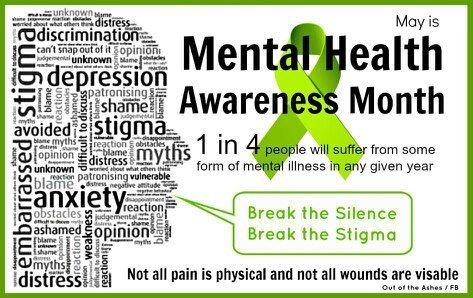
May is Celiac Awareness Month, likewise for another autoimmune disease, Lupus, which is sometimes called a “sister disease” to Sjogren’s because they share so many similarities. In fact, this month in Canada, we recognize 38 different health conditions. Some have an awareness day, some a week, others devote the entire month to public education and awareness.

BrainCancer.org-Go-Gray-in-May

Gluten awareness

Mental Health Month

World Lupus Day

Celiac patients must be vigilant in ensuring they do not consume gluten. For them, eating gluten-free is not a fad or choice, but a medically essential task. Most people eat three meals a day, possibly some snacks. Imagine having to be concerned at every single meal if there might be gluten ingredients in your food, which could trigger horrible gastrointestinal symptoms as well as other systemic symptoms if accidently ingested.

I understand “awareness” months are really not for the people afflicted with any of these illnesses. Likewise caregivers of children, or adults who have chronic and / or terminal illnesses, including mental health issues, or lifelong conditions such as cerebral palsy or autism hardly need any reminder whatsoever of what is involved with having such a diagnosis, its effects on the individual as well as the people who care for them.

So though you may get “sick” of hearing about these various illnesses as we go through the year and they each take turns being condition of the month, remember that no one is more “sick and tired” of them than the person who has the condition. Remember a little understanding on your part can go a long way, someone you love will love you for it!

Sick of hearing about Sjogren’s?

Are you sick of hearing about Sjogren’s Syndrome?

The topic came up this week on Christine Molloy’s Facebook page “Thoughts and Ramblings on Life, Love and Health”. Christine has a blog: http://www.christinemolloy.com She celebrated her 6th anniversary of beginning the blog by posting the link to her very first blog post again this week. Over the years she has posted about Sjogren’s but her blog is not exclusively about the syndrome. At the outset she made a conscious decision for it not to be. She stated she was more than Sjogren’s, so she intended her blog to be more than just that too.

Likewise I made a similar decision about my blog when I began. That is why I have a topic bar underneath my blog title, so people can chose to read just the Sjogren’s posts or random topics, just memoir or poems, or whichever combo thereof.

It is a common concern of most Sjogren’s patients (as I am sure is the same with sufferers of any other chronic illness) to not to talk about their illness all of the time. We are quite aware other people will get sick of hearing about it, because guess what? So do we.

Unfortunately it is not an easy ailment for patients to ignore since symptoms frequently affect a person from head to toe, literally.  It is chronic and without cure. There is no treatment specific to Sjogren’s; what treatments are available are often hit and miss.Relentlessly day after day, Sjogren’s is exhausting.

Even the minority of Sjogren’s patients who are not affected initially by overwhelming fatigue become tired because of the illness being so invasive of time, energy and finances. Fatigue is not just a physical symptom of the disease itself and the chronic flu-like pain so many suffer with, but also becomes a side effect of what it takes to manage the disease. A few years ago a chronic disease lifestyle study was done which showed that Sjogren’s was on par with Multiple Sclerosis as far as the patients’ day to day quality of life.

While admittedly we get tired of not just hearing about Sjogren’s but also living with it, many of us do feel it is critical to raise awareness of the disease, as well as reach out to support others, especially those who may be new to the diagnosis, or perhaps still seeking one. So for that reason I will continue to post about Sjogren’s from time to time, not just during awareness month but whenever the mood strikes me.

Am I doing it for attention, pity, sympathy, or to play the “my disease / symptoms are worse than yours” game? Absolutely not.

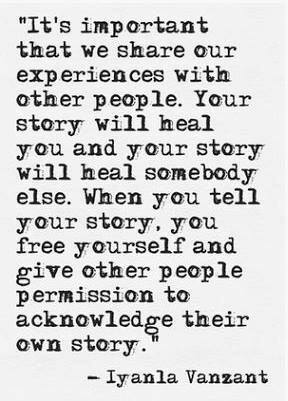
I do it to educate, so perhaps others who may be struggling with symptoms may have a shorter road to diagnosis and treatment than I had. I also do it in hope of creating better understanding not just of the medical aspects of Sjogren’s, but for the challenges that come along with living with the myriad of symptoms. I do it not just for the Sjogren’s patients but also for their loved ones, so that they too may have a better understanding of the syndrome, thus in turn the potential for greater patience and compassion. I do it because telling my story makes me feel better, and maybe just maybe, my story might do the same for you.

vanzant quote re story sharing

http://www.sjogrens.org
http://www.sjogrenscanada.org

If you can swish or spit, celebrate!

We take so many things for granted until we don’t have them in sufficient quantities or quality. For Sjogren’s patients that would include saliva. (And tears of course, but that’s a story for another day.)

Sometimes Sjogren’s patients still have some saliva but I have been told and have read it is of a different quality than normal. Other Sjogren’s patients have quite a large quantity remaining, so find this to be one of their lesser symptoms.

I wouldn’t say the problem of dry mouth varies too much overall in my case. It’s always bad. Though of course there are things that make it slightly better or worse such as types of foods consumed, some teas, certain toothpastes and mouthwashes (especially those containing alcohol).

There is help for dry mouth, both oral medications (a couple different types – Salagen or Evoxac), as well as over the counter products. I have never tried the oral prescription meds because they have never been recommended to me, and also they can have many side effects (lung issues, profuse sweating, etc.) Some people do not tolerate them well. I often have issues with medications so have steered clear of them so far, but would consider if I started choking frequently or developed increasingly serious oral health issues.

I have used over the counter saliva “substitutes” which I do not find pleasant. I once told a doctor it was like having someone else’s lemon flavoured spit in my mouth. It was not like saliva at all but it was a temporary solution, a bit of a fix. There are also numerous other dry mouth products such as discs and lozenges, as well as toothpastes and mouthwashes specifically formulated to help patients cope with the dry mouth symptoms. Sjogren’s patients need to be diligent about oral hygiene and have regular dental cleanings and check-ups. I love my Sonicare electric toothbrush and highly recommend it or another quality electric toothbrush for part of an excellent oral hygiene regimen.

IMG_1422

Oral problems that can occur due to dry mouth include overall oral discomfort (just having a very dry mouth does not feel good), tooth decay, fungal infections, difficulty swallowing dry foods (or even other foods such as lettuce, raw carrots, etc.), difficulty speaking due to tongue and lips sticking, gum disease, bad breath, teeth adhering to cheeks while sleeping, and salivary gland enlargement.

It is important to remember saliva in your mouth is the beginning of the digestive process, vital and not to be taken for granted. If you have lots, celebrate it – swish it around and remind yourself of all the good things it does for you!

NOTE: I appreciate the interest in my Sjogren’s awareness posts and the questions that have come forth over the last couple weeks. Just a reminder, these blog posts are my own experiences and not intended to be a replacement for advice from your own physician or medical specialist. It is also important to remember that symptoms and resulting treatments can vary greatly from patient to patient; that is another reason Sjogren’s Syndrome is so difficult to diagnosis and to treat.

A diagnosis that is hard to swallow…

IMG_1421

“If I gave you a cracker right now, could you chew and swallow it without water?”

Struck by the oddness of the question the Rheumatologist asked, I nevertheless thought about it only a fraction of a second and answered a sure “no”.

Why would he, a Rheumatologist, be asking such a question when I had been sent to him because of my ongoing complaints of sore joints, aching muscles, relentless fatigue and some vague irregularities in common blood test results?

I had seen this specialist once before. He had conducted a brief physical exam at the time, with special attention to my joints and muscles. He assured me I was completely healthy and he had no concerns. However, he sent me off to the lab that day after my appointment because he wanted a few specialized blood tests done. About ten days later he called asking me to come in to see him again for a more thorough examination, as there were some “indicators” in my lab work but he did not elaborate on what they might be.

This visit he started by looking in my mouth. I simply thought he was going to do a complete exam head to toe. After asking me about my ability to swallow a cracker he told me that my mouth was extremely dry, with barely any saliva in it all. I had never thought about it, but as he told me this, I knew he was correct.

This week someone asked me if dry mouth was the first symptom of Sjogren’s I experienced. I replied initially I thought it was not but rather it was the unrelenting fatigue alongside muscle and joint soreness that brought me to the doctor over and over again starting in my thirties. Looking back however, I suspect I may have had Sjogren’s as a teen or possibly as a child.

I remember being quite young and putting butter on my crackers when I ate them. As a teen my Mom looked at my toast and asked sarcastically, “You think you have enough butter on that?” I now realize I needed the fat on my crackers and toast so I could swallow them easily. My Mom had also wondered how I could wander around the house brushing my teeth and not be drooling frothy toothpaste all over. It is all clear now; my mouth was simply very dry for a very long time.

Further evidence of the dry mouth problem was that I had numerous cavities as a child / teen and was subjected to extensive dental work for fillings and crowns. As a young adult, my dentist said “You must have been a real grunge mouth when you were younger?” Thinking back, I realize as a youngster I was probably not as meticulous as I am now about my oral hygiene. I certainly know now how many foods adhere to my teeth; even something as simple as a single bite of a cracker or bread can cling to my teeth for hours since I have so little saliva.

Lack of saliva can increase risk of choking as well. At times I have had a miniscule piece of romaine lettuce or carrot get stuck on the lining of the back of my mouth or throat, strongly adhered, difficult to get back up or go down. Even with a drink sometimes it will cling, requiring me to eat a bite of something else in hope of it catching that fragment along with it to swallow.

The Rheumatologist had explained there were tests which could be done to confirm the Sjogren’s dry mouth diagnosis (lip biopsy, unstimulated salivary flow rate, etc.) but he said in my case they were absolutely unnecessary; a visual check combined with the blood tests, and other physical complaints was all he needed to be sure.

He explained I tested positive for ANA as well as the Sjogren’s specific antibodies SS-A, and SS-B in my blood therefore I indeed had Sjogren’s Syndrome. I had not an imaginary, psychosomatic illness, but a real one that had shown up in my blood explaining the symptoms I had been complaining about and reporting to doctors for years.

In that moment I was relieved, as well as excited to have a diagnosis at last. Little did I know then; in the coming years I would discover the diagnosis would be difficult to swallow in more ways than one.

*Note: Sjogren’s is not the only reason people experience dry mouth. Hundreds of medications (both prescription and over the counter drugs), cancer therapy, tobacco use, and nerve damage are a few of the other main causes of dry mouth. It should be noted that dry mouth is only one of many possible symptoms of Sjogren’s. For more info visit: http://www.sjogrens.org or http://www.sjogrenscanada.org

Sjogren’s Awareness: So, how did I get it?

This week a friend asked me how people get Sjogren’s Syndrome. Where Sjogren’s comes from is a good question. My first thought in response to the question would be: from Hell! I suspect other Sjogren’s patients, especially those who suffer with systemic symptoms and organ involvement would agree.

Personally I have no idea how I got Sjogren’s; medical scientists are still searching for the definitive answer to that question themselves. My friend asked if it was genetic, bacterial or viral. As far as researchers have been able to discover so far it appears it may be a combination of those factors that cause the illness to manifest itself.

Current thinking is perhaps more than one gene may be involved, but scientists are not certain exactly which ones are linked to the disease, because different genes seem to play a role in varying patient populations. Simply having one of the suspect genes will not cause a person to develop the disease; it appears some sort of trigger must activate the immune system. Scientists think that the trigger may be a viral (something like Epstein-Barr perhaps) or a bacterial infection. Some medical researchers are investigating whether maybe the endocrine and nervous systems play a role in developing Sjogren’s as well.

This is how researchers think it may work: A person who has a Sjogren’s-associated gene gets a viral or bacterial infection. The virus or bacteria stimulates the immune system to act, but the suspect gene(s) alters the attack, sending the fighter cells (lymphocytes) to the moisture producing glands initially, usually eyes and mouth. Once there, the lymphocytes attack healthy cells, causing the inflammation which damages the glands and keeps them from working properly. But Sjogren’s autoimmune reaction doesn’t always stop at the eyes and mouth; it can affect all moisture producing glands in the body, as well as other parts of the body including connective tissues, and organs such as the lungs and liver.

Basically how I usually describe it to people is that my body’s immune system started fighting something (virus / bacteria) in my body which means it was doing the job it was supposed to do, BUT then something happened to make it start attacking the healthy tissue instead, causing the autoimmune disease to manifest.

Because medical scientists still have no sure knowledge of the cause, it is no surprise that there is not yet a cure. No specific targeted Sjogren’s treatments are currently available either; there is no “go to drug” specifically for Sjogren’s. The best help patients currently have available are drugs to alleviate symptoms, to attempt to arrest the inflammatory process, and the immune-response.

You might think Sjogren’s is rare, yet it is not. Estimates are 1 in 70 people in USA / Canada have Sjogren’s. What is rare is getting a diagnosis because its symptoms vary from person to person, are often initially subtle and possibly even intermittent. It is estimated that most people wait an average of 5-7 years to get a diagnosis, but many more wait ten or more years and see multiple doctors in the process as they search for an explanation for the myriad of diverse symptoms Sjogren’s can cause, including excessive dryness of eyes, mouth, skin, digestive tract, etc., life-changing fatigue, chronic muscle and joint pain, organ involvement, neuropathies, and even increased lymphomas.

For more information on Sjogren’s I recommend:

“The Sjogren’s Book” (4th edition) edited by Daniel J. Wallace for detailed medical information on all manifestations of Sjogren’s and the science of autoimmunity in relation to it. It reads like a medical textbook, so best for those with medical knowledge or patients who have significant background regarding Sjogren’s.

If you prefer a less scientific read, I suggest “the New Sjogren’s Syndrome Handbook” (revised and expanded 3rd edition) by David J. Wallace which is exceptionally patient friendly.

For first-hand patient stories of getting diagnosed and living with Sjogren’s, Christine Molloy’s “Tales from the Dry Side: The Personal Stories Behind the Autoimmune Illness Sjogren’s Syndrome” is the best I have read.

All of the above are available via Amazon if you are unable to locate elsewhere, including your public library via inter-library loan.

http://www.sjogrens.org
http://www.sjogrenscanada.org

Tales From The Dry Side photo

Sjogren’s Awareness: Oh how I wish I was oblivious!

April is Sjogren’s Syndrome awareness month. As a fellow sufferer said yesterday – it is no April Fool’s joke. In an effort to help educate others about Sjogren’s I will blog some of my journey with this illness throughout the month.

Today on my personal Facebook page, I was asked by a friend how long ago I was diagnosed, and if Sjogren’s was “progressive”.

IMG_1403

I was “officially” diagnosed with Sjogren’s in 2002 (based on positive blood work for 3 different antibodies as well as obvious physical symptoms), however I know that I had it long before then. Significant symptoms began about 12 yrs prior, and lesser symptoms even earlier (as a child/ teen).

After the Sjogren’s diagnosis the docs thought I had Lupus as well, as I met several of the diagnostic criteria for Lupus especially due to sun-related symptoms, including at times the tell-tale malar (butterfly shape rash) on face. Then later, they decided I didn’t have it because I had not developed any signs of “organ involvement” (lungs, kidney, brain most typical organ manifestations with Lupus).

Next they thought I also had Dermatomyositis (another AI disease with specific types of skin and muscle manifestations) due to a very particular type of rash I developed on my hands, Gottron’s Sign, specific to that autoimmune disease. This was diagnosed by a Dermatologist who specializes in skin manifestations of AI diseases.

Eventually they decided I had Undifferentiated Connective Tissue Disease which basically means I have symptoms of both Lupus and Dermatomyositis but not, as they say, “full-blown” disease. Also related to the above I have Raynaud’s Syndrome, and previous episodes of Vasculitis.

Then the most significant event in my medical journey thus far was in May 2009. I was diagnosed with Autoimmune Hepatitis; my immune system attacked and damaged my liver. Hepatitis just means liver inflammation, my illness is not contagious, nor contractible like other “hepatitis”. Quite simply, my body began attacking my liver for no good reason at all.

Immediately after liver biopsy the gold standard to confirm the diagnosis, I began aggressive treatment including initial high dose, then long term steroids – Prednisone, followed by a chemotherapy immune-suppressant drug which I have to be on for the rest of my life, which hopefully as long as I take it and it continues to work, will keep me in a sort of remission.

Additional liver biopsies have confirmed my liver health is not as compromised as it was in 2009. BUT the immune-suppressant drug I take to keep my liver happy has significant side effects including small daily ones like digestive system upset (vomiting / diarrhea/ nausea) ranging to increased risk of cancer especially of lymphomas, and skin cancers. Apparently approximately less than 5% of Sjogren’s patients get AI Hepatitis. I often wonder why I could not be in the small percentage of people who win the lottery instead.

There are some people who only get what are described as the hallmark symptoms of Sjogren’s – dry eye and dry mouth. Too many of us get multiple, systemic symptoms. In speaking to many other Sjogren’s patients it also seems that once you are diagnosed with one AI connective tissue disease you begin to collect others, a domino effect. Over the previous few years I have suspected that I have thyroid and neurological issues developing or undiagnosed which remain under investigation.

Is Sjogren’s progressive? No, not in the sense of diseases such as ALS, which continually ravage the body destroying function to a greater and greater extent leading to inevitable death from that disease specifically. Sjogren’s is however, potentially life-threatening when patients experience organ involvement such as AI Hepatitis or other serious complications. Sjogren’s patients are at 44x greater risk for certain lymphomas. The drug I need to be on for my liver also has increased risk of lymphoma as a side effect. Does this mean I will get lymphoma? No, but I do feel like am rolling the dice. Based on my lotto winnings, I am not often a lucky gambler. Fingers crossed, hoping for better luck this time!

For more info on Sjogren’s: http://www.sjogrens.org

Never Doubt One Person Can Make a Difference

Back in July 2013 I blogged about a Kickstarter campaign by Christine Molloy raising funds for her anthology of 13 personal stories by Sjogren’s patients, including my own story.

Kickstarter is an innovative way to make creative projects happen, when traditional sources are not available. I am happy to report that 101 people gave $7305. towards the goal of $7000. for Christine to complete the project, and she has indeed published the book. Thank you to all Kickstarter contributors!

Christine’s goal in publishing the book was to allow individuals the opportunity to share their personal stories in an effort to increase awareness of Sjogren’s Syndrome.

Christine did not publish the book as a money-making venture, nor did any of the contributors submit with any hope to profit from the sale of it. Each of us told our stories solely in an effort to reach out to others with Sjogren’s, create support and understanding among patients and their families/friends, as well as to generate much needed awareness of Sjogren’s within the medical professions, as well as the community at large.

Here is a brief blurb about the book from Ms. Molloy:

Imagine for a second what life would be like if for years, you searched for answers to mysterious physical symptoms that were so severe, you could no longer participate in the daily activities of your life. What your life would be like if not only did the medical community doubt your sanity, but you begin to question it yourself. For approximately four million people in the United States, including tennis superstar Venus Williams, this is often a reality because they have Sjögren’s syndrome; an autoimmune illness that severely affects the moisture producing glands in the body. It is difficult to diagnose and even more difficult to effectively treat as there is no cure.

The publication gained greater credibility having the Sjogren’s Syndrome Foundation (USA) CEO Steven Taylor provide the book’s Forward. Ms. Molloy will also be attending the annual National Sjogren’s patient conference this Spring. Today she is attending the Boston Sjogren’s Support Group. The book has sold hundreds of hard copies , as well as Kindle digital copies.  A portion of every book ordered through the Sjogren’s Syndrome Foundation in the USA goes directly back to the Foundation for research and generating awareness. Congratulations Christine! In a short time, you have succeeded in creating much awareness with much more to come. You have shown that indeed one person can make a big difference!

In Canada, the book may be purchased directly through Amazon (paperback or Kindle):

http://www.amazon.ca/Tales-Dry-Side-Personal-Autoimmune/dp/1478722096/ref=sr_1_1?ie=UTF8&qid=1391298087&sr=8-1&keywords=Tales+From+the+Dry+Side

It can also be purchased directly from the Sjogren’s Syndrome Foundation website, on amazon.com, and in Barnes + Noble bookstores in the USA.

To read more about this project, Sjogren’s, living with Autoimmune disease, Christine’s personal journey and more, check out her blog – “Thoughts and Ramblings on Life, Love and Health” on the links below:

Christine Molloy photo

http://www.christinemolloy.com/

http://www.facebook.com/ThoughtsandRamblingsOnLife.Love.and.Health