Sick of hearing about Sjogren’s?

Are you sick of hearing about Sjogren’s Syndrome?

The topic came up this week on Christine Molloy’s Facebook page “Thoughts and Ramblings on Life, Love and Health”. Christine has a blog: http://www.christinemolloy.com She celebrated her 6th anniversary of beginning the blog by posting the link to her very first blog post again this week. Over the years she has posted about Sjogren’s but her blog is not exclusively about the syndrome. At the outset she made a conscious decision for it not to be. She stated she was more than Sjogren’s, so she intended her blog to be more than just that too.

Likewise I made a similar decision about my blog when I began. That is why I have a topic bar underneath my blog title, so people can chose to read just the Sjogren’s posts or random topics, just memoir or poems, or whichever combo thereof.

It is a common concern of most Sjogren’s patients (as I am sure is the same with sufferers of any other chronic illness) to not to talk about their illness all of the time. We are quite aware other people will get sick of hearing about it, because guess what? So do we.

Unfortunately it is not an easy ailment for patients to ignore since symptoms frequently affect a person from head to toe, literally.  It is chronic and without cure. There is no treatment specific to Sjogren’s; what treatments are available are often hit and miss.Relentlessly day after day, Sjogren’s is exhausting.

Even the minority of Sjogren’s patients who are not affected initially by overwhelming fatigue become tired because of the illness being so invasive of time, energy and finances. Fatigue is not just a physical symptom of the disease itself and the chronic flu-like pain so many suffer with, but also becomes a side effect of what it takes to manage the disease. A few years ago a chronic disease lifestyle study was done which showed that Sjogren’s was on par with Multiple Sclerosis as far as the patients’ day to day quality of life.

While admittedly we get tired of not just hearing about Sjogren’s but also living with it, many of us do feel it is critical to raise awareness of the disease, as well as reach out to support others, especially those who may be new to the diagnosis, or perhaps still seeking one. So for that reason I will continue to post about Sjogren’s from time to time, not just during awareness month but whenever the mood strikes me.

Am I doing it for attention, pity, sympathy, or to play the “my disease / symptoms are worse than yours” game? Absolutely not.

I do it to educate, so perhaps others who may be struggling with symptoms may have a shorter road to diagnosis and treatment than I had. I also do it in hope of creating better understanding not just of the medical aspects of Sjogren’s, but for the challenges that come along with living with the myriad of symptoms. I do it not just for the Sjogren’s patients but also for their loved ones, so that they too may have a better understanding of the syndrome, thus in turn the potential for greater patience and compassion. I do it because telling my story makes me feel better, and maybe just maybe, my story might do the same for you.
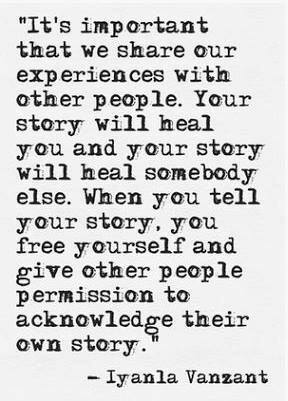
vanzant quote re story sharing

http://www.sjogrens.org
http://www.sjogrenscanada.org

If you can swish or spit, celebrate!

We take so many things for granted until we don’t have them in sufficient quantities or quality. For Sjogren’s patients that would include saliva. (And tears of course, but that’s a story for another day.)

Sometimes Sjogren’s patients still have some saliva but I have been told and have read it is of a different quality than normal. Other Sjogren’s patients have quite a large quantity remaining, so find this to be one of their lesser symptoms.

I wouldn’t say the problem of dry mouth varies too much overall in my case. It’s always bad. Though of course there are things that make it slightly better or worse such as types of foods consumed, some teas, certain toothpastes and mouthwashes (especially those containing alcohol).

There is help for dry mouth, both oral medications (a couple different types – Salagen or Evoxac), as well as over the counter products. I have never tried the oral prescription meds because they have never been recommended to me, and also they can have many side effects (lung issues, profuse sweating, etc.) Some people do not tolerate them well. I often have issues with medications so have steered clear of them so far, but would consider if I started choking frequently or developed increasingly serious oral health issues.

I have used over the counter saliva “substitutes” which I do not find pleasant. I once told a doctor it was like having someone else’s lemon flavoured spit in my mouth. It was not like saliva at all but it was a temporary solution, a bit of a fix. There are also numerous other dry mouth products such as discs and lozenges, as well as toothpastes and mouthwashes specifically formulated to help patients cope with the dry mouth symptoms. Sjogren’s patients need to be diligent about oral hygiene and have regular dental cleanings and check-ups. I love my Sonicare electric toothbrush and highly recommend it or another quality electric toothbrush for part of an excellent oral hygiene regimen.

IMG_1422

Oral problems that can occur due to dry mouth include overall oral discomfort (just having a very dry mouth does not feel good), tooth decay, fungal infections, difficulty swallowing dry foods (or even other foods such as lettuce, raw carrots, etc.), difficulty speaking due to tongue and lips sticking, gum disease, bad breath, teeth adhering to cheeks while sleeping, and salivary gland enlargement.

It is important to remember saliva in your mouth is the beginning of the digestive process, vital and not to be taken for granted. If you have lots, celebrate it – swish it around and remind yourself of all the good things it does for you!

NOTE: I appreciate the interest in my Sjogren’s awareness posts and the questions that have come forth over the last couple weeks. Just a reminder, these blog posts are my own experiences and not intended to be a replacement for advice from your own physician or medical specialist. It is also important to remember that symptoms and resulting treatments can vary greatly from patient to patient; that is another reason Sjogren’s Syndrome is so difficult to diagnosis and to treat.

A diagnosis that is hard to swallow…

IMG_1421

“If I gave you a cracker right now, could you chew and swallow it without water?”

Struck by the oddness of the question the Rheumatologist asked, I nevertheless thought about it only a fraction of a second and answered a sure “no”.

Why would he, a Rheumatologist, be asking such a question when I had been sent to him because of my ongoing complaints of sore joints, aching muscles, relentless fatigue and some vague irregularities in common blood test results?

I had seen this specialist once before. He had conducted a brief physical exam at the time, with special attention to my joints and muscles. He assured me I was completely healthy and he had no concerns. However, he sent me off to the lab that day after my appointment because he wanted a few specialized blood tests done. About ten days later he called asking me to come in to see him again for a more thorough examination, as there were some “indicators” in my lab work but he did not elaborate on what they might be.

This visit he started by looking in my mouth. I simply thought he was going to do a complete exam head to toe. After asking me about my ability to swallow a cracker he told me that my mouth was extremely dry, with barely any saliva in it all. I had never thought about it, but as he told me this, I knew he was correct.

This week someone asked me if dry mouth was the first symptom of Sjogren’s I experienced. I replied initially I thought it was not but rather it was the unrelenting fatigue alongside muscle and joint soreness that brought me to the doctor over and over again starting in my thirties. Looking back however, I suspect I may have had Sjogren’s as a teen or possibly as a child.

I remember being quite young and putting butter on my crackers when I ate them. As a teen my Mom looked at my toast and asked sarcastically, “You think you have enough butter on that?” I now realize I needed the fat on my crackers and toast so I could swallow them easily. My Mom had also wondered how I could wander around the house brushing my teeth and not be drooling frothy toothpaste all over. It is all clear now; my mouth was simply very dry for a very long time.

Further evidence of the dry mouth problem was that I had numerous cavities as a child / teen and was subjected to extensive dental work for fillings and crowns. As a young adult, my dentist said “You must have been a real grunge mouth when you were younger?” Thinking back, I realize as a youngster I was probably not as meticulous as I am now about my oral hygiene. I certainly know now how many foods adhere to my teeth; even something as simple as a single bite of a cracker or bread can cling to my teeth for hours since I have so little saliva.

Lack of saliva can increase risk of choking as well. At times I have had a miniscule piece of romaine lettuce or carrot get stuck on the lining of the back of my mouth or throat, strongly adhered, difficult to get back up or go down. Even with a drink sometimes it will cling, requiring me to eat a bite of something else in hope of it catching that fragment along with it to swallow.

The Rheumatologist had explained there were tests which could be done to confirm the Sjogren’s dry mouth diagnosis (lip biopsy, unstimulated salivary flow rate, etc.) but he said in my case they were absolutely unnecessary; a visual check combined with the blood tests, and other physical complaints was all he needed to be sure.

He explained I tested positive for ANA as well as the Sjogren’s specific antibodies SS-A, and SS-B in my blood therefore I indeed had Sjogren’s Syndrome. I had not an imaginary, psychosomatic illness, but a real one that had shown up in my blood explaining the symptoms I had been complaining about and reporting to doctors for years.

In that moment I was relieved, as well as excited to have a diagnosis at last. Little did I know then; in the coming years I would discover the diagnosis would be difficult to swallow in more ways than one.

*Note: Sjogren’s is not the only reason people experience dry mouth. Hundreds of medications (both prescription and over the counter drugs), cancer therapy, tobacco use, and nerve damage are a few of the other main causes of dry mouth. It should be noted that dry mouth is only one of many possible symptoms of Sjogren’s. For more info visit: http://www.sjogrens.org or http://www.sjogrenscanada.org

Bite-Size Memoir Prompt: Childhood Illness

On my toes, a clumsy pyjama clad ballerina, neck stretched back, head tilted with mouth wide open trying to catch my balance and the bright light over the bathroom vanity long enough to see the back of my throat. Scratchy and raw for days I had an urgent need to see what was happening back there.

Finally a glimpse; crimson with tiny thickened white splotches scattered about my throat. I was eleven years old; old enough to know it was not good.

“Dad, look in the back of my throat. I think I have an infection.” I blurt out the diagnosis as I throw my head back to open wide in front of my Dad as he makes his breakfast.

“That’s just bread crumbs.”

“No it’s not. It’s infection.”

I convince my Mom to take me to the doctor, get antibiotics for strep throat, and begin my lifelong health vigilance.

************************************************************************************************************

To learn more about “Bite-Size Memoir” (memoir of no more, no less than 150 words based on a weekly prompt) please visit Lisa Reiter’s blog “Sharing the Story”:

http://sharingthestoryblog.wordpress.com/2014/06/13/bite-size-memoir-no-7-childhood-illness/


Never Doubt One Person Can Make a Difference

Back in July 2013 I blogged about a Kickstarter campaign by Christine Molloy raising funds for her anthology of 13 personal stories by Sjogren’s patients, including my own story.

Kickstarter is an innovative way to make creative projects happen, when traditional sources are not available. I am happy to report that 101 people gave $7305. towards the goal of $7000. for Christine to complete the project, and she has indeed published the book. Thank you to all Kickstarter contributors!

Christine’s goal in publishing the book was to allow individuals the opportunity to share their personal stories in an effort to increase awareness of Sjogren’s Syndrome.

Christine did not publish the book as a money-making venture, nor did any of the contributors submit with any hope to profit from the sale of it. Each of us told our stories solely in an effort to reach out to others with Sjogren’s, create support and understanding among patients and their families/friends, as well as to generate much needed awareness of Sjogren’s within the medical professions, as well as the community at large.

Here is a brief blurb about the book from Ms. Molloy:

Imagine for a second what life would be like if for years, you searched for answers to mysterious physical symptoms that were so severe, you could no longer participate in the daily activities of your life. What your life would be like if not only did the medical community doubt your sanity, but you begin to question it yourself. For approximately four million people in the United States, including tennis superstar Venus Williams, this is often a reality because they have Sjögren’s syndrome; an autoimmune illness that severely affects the moisture producing glands in the body. It is difficult to diagnose and even more difficult to effectively treat as there is no cure.

The publication gained greater credibility having the Sjogren’s Syndrome Foundation (USA) CEO Steven Taylor provide the book’s Forward. Ms. Molloy will also be attending the annual National Sjogren’s patient conference this Spring. Today she is attending the Boston Sjogren’s Support Group. The book has sold hundreds of hard copies , as well as Kindle digital copies.  A portion of every book ordered through the Sjogren’s Syndrome Foundation in the USA goes directly back to the Foundation for research and generating awareness. Congratulations Christine! In a short time, you have succeeded in creating much awareness with much more to come. You have shown that indeed one person can make a big difference!

In Canada, the book may be purchased directly through Amazon (paperback or Kindle):

http://www.amazon.ca/Tales-Dry-Side-Personal-Autoimmune/dp/1478722096/ref=sr_1_1?ie=UTF8&qid=1391298087&sr=8-1&keywords=Tales+From+the+Dry+Side

It can also be purchased directly from the Sjogren’s Syndrome Foundation website, on amazon.com, and in Barnes + Noble bookstores in the USA.

To read more about this project, Sjogren’s, living with Autoimmune disease, Christine’s personal journey and more, check out her blog – “Thoughts and Ramblings on Life, Love and Health” on the links below:

Christine Molloy photo

http://www.christinemolloy.com/

http://www.facebook.com/ThoughtsandRamblingsOnLife.Love.and.Health

Can you spare a dollar? Share a link?

I am VERY hesitant to do this on my blog, but I am asking if you might consider donating to this project, and if you are unable to, or do not wish to make a monetary donation, could you please consider sharing the link with others you know who might donate or who wish to learn about Sjogren’s Syndrome?

Kickstarter is an innovative way to make creative projects happen, when traditional sources are not available. Donation amounts can be as small as one dollar!

http://www.kickstarter.com/projects/63135010/publication-of-the-book-tales-from-the-dry-side

This book of thirteen stories about those who live with the often misdiagnosed autoimmune illness Sjögren’s Syndrome, includes my own personal story.

Christine Molloy a fellow Sjogren’s sufferer is the person publishing the anthology. Here is an excerpt from the “blurb” about the book (you will find the extended version , as well as two additional updates on the link above):

TALES FROM THE DRY SIDE: THE PERSONAL STORIES BEHIND THE AUTOIMMUNE ILLNESS SJÖGREN’S SYNDROME

Imagine for a second what life would be like if for years, you searched for answers to mysterious physical symptoms that were so severe, you could no longer participate in the daily activities of your life. What your life would be like if not only did the medical community doubt your sanity, but you begin to question it yourself. For approximately four million people in the United States, including tennis superstar Venus Williams, this is often a reality because they have Sjögren’s syndrome; an autoimmune illness that severely affects the moisture producing glands in the body. It is difficult to diagnose and even more difficult to effectively treat as there is no cure.

Thank you for your consideration, and for any help you can give….even simply becoming educated about Sjogren’s and spreading the word!