Put On Purple today!

So, I was going to leave illnesses behind to blog about something completely unrelated to my medical adventures, but then I realized today is Lupus Awareness “Put On Purple” Day, so decided to post my POP selfie.

IMG_1512

Before I was diagnosed with Sjogren’s Syndrome, when I was trying everything I could think of (other than medication) to alleviate the myriad of muscle and joint aches I was suffering from, a physiotherapist suggested I ask my doctor to be checked for Lupus. I had asked before. I asked again. My doctor refused, saying I did not have Lupus or any other AI connective tissue disease. So I found a doctor who was willing to test for it.

I did test positive for the ANA blood test but not the anti-dsDNA antibodies for Lupus. A tiny percentage of people who do not have Lupus can test positive for ANA but most people who test positive do have Lupus. Symptoms have to be considered alongside blood work.

If you’d like to know more about the specific blood tests here is a reputable link: http://www.hopkinslupus.org/lupus-tests/lupus-blood-tests/

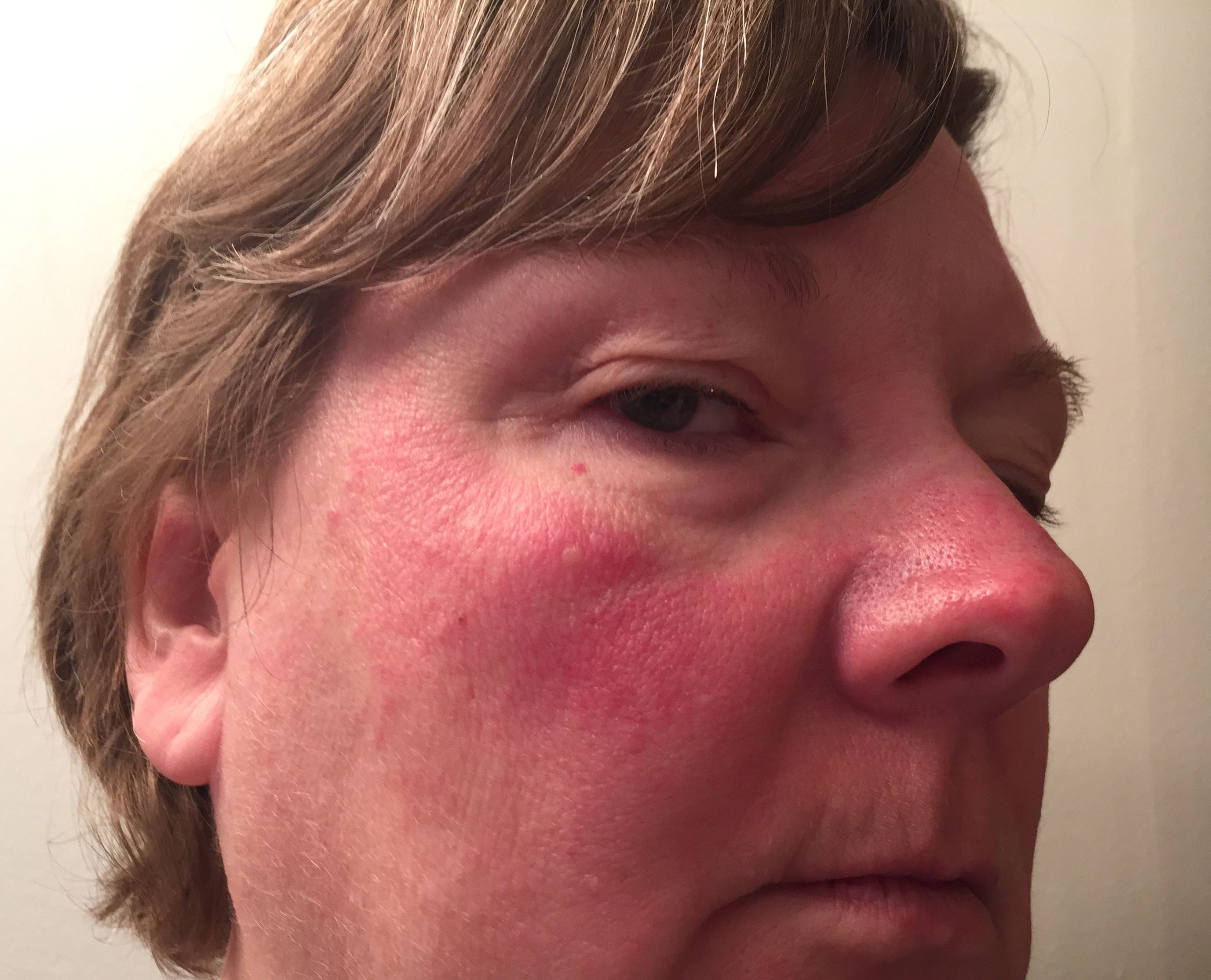
As I mentioned in earlier posts I did also test positive for the SS-A and SS-B antibodies specific for Sjogren’s. SS-A are related to sun sensitivity, so though I have had the definitive Lupus “malar rash” on my face in the past, some doctors felt it was due to the SS-A antibodies in combination with too much sun exposure, not due to Lupus.

It only takes mere minutes, even fifteen in direct summer sun for me to end up with a malar rash accompanied soon after by extreme fatigue. Some people think sun exposure for people with Lupus or SS-A antibodies of Sjogren’s is no big deal. They are wrong. Even minimal sun exposure can result in a systemic response, possibly even triggering an autoimmune attack on an individual’s organs such as kidneys, the brain, or lungs.
IMG_0292

The jury still seems to be out, no agreement between doctors thus far on my Lupus diagnosis. Although I do have other symptoms of Lupus, one doctor said I don’t have “full-blown” Lupus with “organ involvement”. and because I additionally have had skin manifestations of yet another autoimmune connective tissue disease – dermatomyositis – which affects the skin and underlying muscle tissue they are calling what I have “Undifferentiated Connective Tissue Disease”.

There is an accepted criteria for diagnosis of Lupus and a person must exhibit 4 of the 11 characteristics over time to be diagnosed, I have six. To learn more about the diagnostic criteria and symptoms visit your local Lupus organization website or click here:

http://www.lupus.org/answers/entry/lupus-diagnostic-criteria

The Undifferentiated Connective Tissue Disease diagnosis is on top of Sjogren’s and Autoimmune Hepatitis. With my body, the fun just never seems to end! Most of the people I know personally who have Sjogren’s also seem to be collecting other autoimmune conditions as time goes on.

We’d all prefer to collect something else. However it seems getting one AI connective tissue disease such as Lupus, is like getting one domino, soon you collect more to stack alongside, then from time to time, one gets pushed over toppling the others spinning you into a “flare” of one or more of your conditions, then possibly adding yet another.

Part of why Lupus and related conditions are so difficult to diagnose is every patient can present a different constellation of symptoms, and blood tests do not always give definitive answers. Awareness will help create quicker diagnosis times, expedite necessary treatment protocols, and hopefully lengthen life span while enabling higher quality of life as well.

Help spread the word and “Put On Purple”!

Oh no, here we go again!

It is now May 1st. Sjogren’s Awareness Month is over with for another year. I’m so relieved that I don’t have to think about it anymore!

Yes, of course I am being sarcastic. Anyone who suffers with a chronic illness is well “aware” of the effects of the illness every month, week, day, and sometimes minute of the year. It is not just Sjogren’s patients who have to live with on-going symptoms, but many people who have autoimmune and other illnesses.

Type 1 diabetics cannot just “let it go” and not think about their bodies, symptoms, medications, and self-care. If a Type 1 Diabetic doesn’t monitor their blood sugar level the consequences can indeed be dire. It is essential they are vigilant in monitoring themselves several times a day.

May is Celiac Awareness Month, likewise for another autoimmune disease, Lupus, which is sometimes called a “sister disease” to Sjogren’s because they share so many similarities. In fact, this month in Canada, we recognize 38 different health conditions. Some have an awareness day, some a week, others devote the entire month to public education and awareness.

BrainCancer.org-Go-Gray-in-May

Gluten awareness

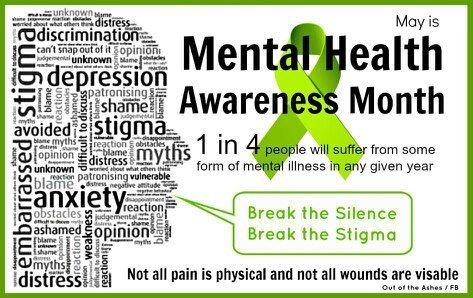
Mental Health Month

World Lupus Day

Celiac patients must be vigilant in ensuring they do not consume gluten. For them, eating gluten-free is not a fad or choice, but a medically essential task. Most people eat three meals a day, possibly some snacks. Imagine having to be concerned at every single meal if there might be gluten ingredients in your food, which could trigger horrible gastrointestinal symptoms as well as other systemic symptoms if accidently ingested.

I understand “awareness” months are really not for the people afflicted with any of these illnesses. Likewise caregivers of children, or adults who have chronic and / or terminal illnesses, including mental health issues, or lifelong conditions such as cerebral palsy or autism hardly need any reminder whatsoever of what is involved with having such a diagnosis, its effects on the individual as well as the people who care for them.

So though you may get “sick” of hearing about these various illnesses as we go through the year and they each take turns being condition of the month, remember that no one is more “sick and tired” of them than the person who has the condition. Remember a little understanding on your part can go a long way, someone you love will love you for it!

Sick of hearing about Sjogren’s?

Are you sick of hearing about Sjogren’s Syndrome?

The topic came up this week on Christine Molloy’s Facebook page “Thoughts and Ramblings on Life, Love and Health”. Christine has a blog: http://www.christinemolloy.com She celebrated her 6th anniversary of beginning the blog by posting the link to her very first blog post again this week. Over the years she has posted about Sjogren’s but her blog is not exclusively about the syndrome. At the outset she made a conscious decision for it not to be. She stated she was more than Sjogren’s, so she intended her blog to be more than just that too.

Likewise I made a similar decision about my blog when I began. That is why I have a topic bar underneath my blog title, so people can chose to read just the Sjogren’s posts or random topics, just memoir or poems, or whichever combo thereof.

It is a common concern of most Sjogren’s patients (as I am sure is the same with sufferers of any other chronic illness) to not to talk about their illness all of the time. We are quite aware other people will get sick of hearing about it, because guess what? So do we.

Unfortunately it is not an easy ailment for patients to ignore since symptoms frequently affect a person from head to toe, literally.  It is chronic and without cure. There is no treatment specific to Sjogren’s; what treatments are available are often hit and miss.Relentlessly day after day, Sjogren’s is exhausting.

Even the minority of Sjogren’s patients who are not affected initially by overwhelming fatigue become tired because of the illness being so invasive of time, energy and finances. Fatigue is not just a physical symptom of the disease itself and the chronic flu-like pain so many suffer with, but also becomes a side effect of what it takes to manage the disease. A few years ago a chronic disease lifestyle study was done which showed that Sjogren’s was on par with Multiple Sclerosis as far as the patients’ day to day quality of life.

While admittedly we get tired of not just hearing about Sjogren’s but also living with it, many of us do feel it is critical to raise awareness of the disease, as well as reach out to support others, especially those who may be new to the diagnosis, or perhaps still seeking one. So for that reason I will continue to post about Sjogren’s from time to time, not just during awareness month but whenever the mood strikes me.

Am I doing it for attention, pity, sympathy, or to play the “my disease / symptoms are worse than yours” game? Absolutely not.

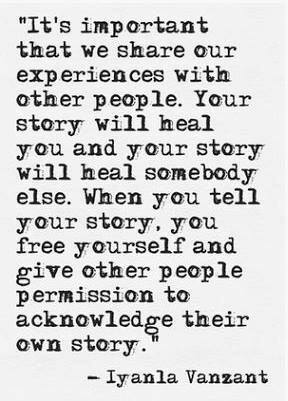
I do it to educate, so perhaps others who may be struggling with symptoms may have a shorter road to diagnosis and treatment than I had. I also do it in hope of creating better understanding not just of the medical aspects of Sjogren’s, but for the challenges that come along with living with the myriad of symptoms. I do it not just for the Sjogren’s patients but also for their loved ones, so that they too may have a better understanding of the syndrome, thus in turn the potential for greater patience and compassion. I do it because telling my story makes me feel better, and maybe just maybe, my story might do the same for you.

vanzant quote re story sharing

http://www.sjogrens.org
http://www.sjogrenscanada.org

If you can swish or spit, celebrate!

We take so many things for granted until we don’t have them in sufficient quantities or quality. For Sjogren’s patients that would include saliva. (And tears of course, but that’s a story for another day.)

Sometimes Sjogren’s patients still have some saliva but I have been told and have read it is of a different quality than normal. Other Sjogren’s patients have quite a large quantity remaining, so find this to be one of their lesser symptoms.

I wouldn’t say the problem of dry mouth varies too much overall in my case. It’s always bad. Though of course there are things that make it slightly better or worse such as types of foods consumed, some teas, certain toothpastes and mouthwashes (especially those containing alcohol).

There is help for dry mouth, both oral medications (a couple different types – Salagen or Evoxac), as well as over the counter products. I have never tried the oral prescription meds because they have never been recommended to me, and also they can have many side effects (lung issues, profuse sweating, etc.) Some people do not tolerate them well. I often have issues with medications so have steered clear of them so far, but would consider if I started choking frequently or developed increasingly serious oral health issues.

I have used over the counter saliva “substitutes” which I do not find pleasant. I once told a doctor it was like having someone else’s lemon flavoured spit in my mouth. It was not like saliva at all but it was a temporary solution, a bit of a fix. There are also numerous other dry mouth products such as discs and lozenges, as well as toothpastes and mouthwashes specifically formulated to help patients cope with the dry mouth symptoms. Sjogren’s patients need to be diligent about oral hygiene and have regular dental cleanings and check-ups. I love my Sonicare electric toothbrush and highly recommend it or another quality electric toothbrush for part of an excellent oral hygiene regimen.

IMG_1422

Oral problems that can occur due to dry mouth include overall oral discomfort (just having a very dry mouth does not feel good), tooth decay, fungal infections, difficulty swallowing dry foods (or even other foods such as lettuce, raw carrots, etc.), difficulty speaking due to tongue and lips sticking, gum disease, bad breath, teeth adhering to cheeks while sleeping, and salivary gland enlargement.

It is important to remember saliva in your mouth is the beginning of the digestive process, vital and not to be taken for granted. If you have lots, celebrate it – swish it around and remind yourself of all the good things it does for you!

NOTE: I appreciate the interest in my Sjogren’s awareness posts and the questions that have come forth over the last couple weeks. Just a reminder, these blog posts are my own experiences and not intended to be a replacement for advice from your own physician or medical specialist. It is also important to remember that symptoms and resulting treatments can vary greatly from patient to patient; that is another reason Sjogren’s Syndrome is so difficult to diagnosis and to treat.

A diagnosis that is hard to swallow…

IMG_1421

“If I gave you a cracker right now, could you chew and swallow it without water?”

Struck by the oddness of the question the Rheumatologist asked, I nevertheless thought about it only a fraction of a second and answered a sure “no”.

Why would he, a Rheumatologist, be asking such a question when I had been sent to him because of my ongoing complaints of sore joints, aching muscles, relentless fatigue and some vague irregularities in common blood test results?

I had seen this specialist once before. He had conducted a brief physical exam at the time, with special attention to my joints and muscles. He assured me I was completely healthy and he had no concerns. However, he sent me off to the lab that day after my appointment because he wanted a few specialized blood tests done. About ten days later he called asking me to come in to see him again for a more thorough examination, as there were some “indicators” in my lab work but he did not elaborate on what they might be.

This visit he started by looking in my mouth. I simply thought he was going to do a complete exam head to toe. After asking me about my ability to swallow a cracker he told me that my mouth was extremely dry, with barely any saliva in it all. I had never thought about it, but as he told me this, I knew he was correct.

This week someone asked me if dry mouth was the first symptom of Sjogren’s I experienced. I replied initially I thought it was not but rather it was the unrelenting fatigue alongside muscle and joint soreness that brought me to the doctor over and over again starting in my thirties. Looking back however, I suspect I may have had Sjogren’s as a teen or possibly as a child.

I remember being quite young and putting butter on my crackers when I ate them. As a teen my Mom looked at my toast and asked sarcastically, “You think you have enough butter on that?” I now realize I needed the fat on my crackers and toast so I could swallow them easily. My Mom had also wondered how I could wander around the house brushing my teeth and not be drooling frothy toothpaste all over. It is all clear now; my mouth was simply very dry for a very long time.

Further evidence of the dry mouth problem was that I had numerous cavities as a child / teen and was subjected to extensive dental work for fillings and crowns. As a young adult, my dentist said “You must have been a real grunge mouth when you were younger?” Thinking back, I realize as a youngster I was probably not as meticulous as I am now about my oral hygiene. I certainly know now how many foods adhere to my teeth; even something as simple as a single bite of a cracker or bread can cling to my teeth for hours since I have so little saliva.

Lack of saliva can increase risk of choking as well. At times I have had a miniscule piece of romaine lettuce or carrot get stuck on the lining of the back of my mouth or throat, strongly adhered, difficult to get back up or go down. Even with a drink sometimes it will cling, requiring me to eat a bite of something else in hope of it catching that fragment along with it to swallow.

The Rheumatologist had explained there were tests which could be done to confirm the Sjogren’s dry mouth diagnosis (lip biopsy, unstimulated salivary flow rate, etc.) but he said in my case they were absolutely unnecessary; a visual check combined with the blood tests, and other physical complaints was all he needed to be sure.

He explained I tested positive for ANA as well as the Sjogren’s specific antibodies SS-A, and SS-B in my blood therefore I indeed had Sjogren’s Syndrome. I had not an imaginary, psychosomatic illness, but a real one that had shown up in my blood explaining the symptoms I had been complaining about and reporting to doctors for years.

In that moment I was relieved, as well as excited to have a diagnosis at last. Little did I know then; in the coming years I would discover the diagnosis would be difficult to swallow in more ways than one.

*Note: Sjogren’s is not the only reason people experience dry mouth. Hundreds of medications (both prescription and over the counter drugs), cancer therapy, tobacco use, and nerve damage are a few of the other main causes of dry mouth. It should be noted that dry mouth is only one of many possible symptoms of Sjogren’s. For more info visit: http://www.sjogrens.org or http://www.sjogrenscanada.org

Bite-Size Memoir Prompt: Childhood Illness

On my toes, a clumsy pyjama clad ballerina, neck stretched back, head tilted with mouth wide open trying to catch my balance and the bright light over the bathroom vanity long enough to see the back of my throat. Scratchy and raw for days I had an urgent need to see what was happening back there.

Finally a glimpse; crimson with tiny thickened white splotches scattered about my throat. I was eleven years old; old enough to know it was not good.

“Dad, look in the back of my throat. I think I have an infection.” I blurt out the diagnosis as I throw my head back to open wide in front of my Dad as he makes his breakfast.

“That’s just bread crumbs.”

“No it’s not. It’s infection.”

I convince my Mom to take me to the doctor, get antibiotics for strep throat, and begin my lifelong health vigilance.

************************************************************************************************************

To learn more about “Bite-Size Memoir” (memoir of no more, no less than 150 words based on a weekly prompt) please visit Lisa Reiter’s blog “Sharing the Story”:

http://sharingthestoryblog.wordpress.com/2014/06/13/bite-size-memoir-no-7-childhood-illness/


First 15 Minutes in Day Surgery

(What follows below is the first draft of a  writing assignment I completed for writing group. The exercise was to show “setting” of our choice, fact or fiction. )

Celeste leaned back on the narrow bed that was covered by a thin white cotton sheet smelling slightly of chlorine bleach stretched over the thick rubbery plastic mattress pad. Feeling the soft rubbery surface underneath her reminded her of sleeping on an air mattress that was only half inflated. Some might be bothered by the faint bleach odor but to her it brought back memories of the neighbourhood swimming pool. Good memories. The flat as a pancake pillow underneath her head was also plastic, covered by a well bleached, highly sanitized, vellum thin pillowcase. Though the bed was bound to be hot and uncomfortable for someone with a fever, it was fine for someone chilled with fear, someone like Celeste.

She wiggled and adjusted her body to get more comfortable, finding just the right position to support her aching spine and hips. Breathing a lengthy drawn out sigh, she felt her body momentarily relax in spite of her racing mind. She tugged on the slightly rough but thick blanket on the end of the bed, pulling it up over her entire body. She had the thought: “what if this was a magic blanket, that pulling it up over your body could make you disappear Chris Angel style?” If only.

Having been temporarily left alone with her thoughts, she stared up at the stark white ceiling. Her eyes then slowly drifted downwards to the barren white walls decorated only with medical paraphernalia such as oxygen outlets, suction vessels, and call button cords. Her eyes went down to the recently polished white linoleum tile floor, then up to the printed plaid wedgewood blue with tangerine orange curtain separating the beds. Thankfully someone at some point had made the decision to provide a touch of color and cheeriness to the otherwise plain bleak room. She hoped they at least got a high five for that decision.

Resting her right arm alongside her body, she kept it still and straight so as not to disturb the IV that had been inserted. She had not been prepared for the chemical medicinal smell that invaded her nostrils, so strong that she tasted it on her tongue for a few seconds before it dispersed into the air as the nurse swabbed her arm then plunged the tiny needle into her blue-green vein.

All was quiet at the moment except for country music being played softly. She recognized Johnny Reid crooning a ballad. Possibly it was slowing her pulse. Yes, it seemed it was. Research said music could do that; she believed it to be true. Johnny Reid was probably a wise choice. His mellow voice probably would not be overly offensive to any of the people in the room, no head bangers or gang bangers here today.

As Celeste had entered the day surgery ward with the chubby, slightly limping, pleasant demeanor but all business nurse leading the way to her bed, she had checked out the other patients, none of which had their bedside curtains completely drawn. One older middle aged Native woman with glasses on, eyes closed, possibly sleeping or perhaps just pretending. One older middle aged Caucasian woman with long brown hair pulled back in a ponytail reading an Oprah Pick book. Celeste could recognize the large white sticker signifying it being an Oprah book from across the room. One older man beginning to rouse, momentarily trying to talk to the woman on the chair beside him, sounding like a soft-spoken Darth Vader, since he had an oxygen mask covering his mouth and nose. One very elderly lady, with two middle aged men standing at her bedside wearing ball caps, blue jeans, one a white t-shirt, the other a denim work shirt, quietly discussing a concrete pouring project, while the woman lay completely still, eyes staring straight ahead.

Just as the nurse showed Celeste the bed that was to be hers for the day, next to the sliver of an oak paneled closet that would store her clothes while she was wearing her baby blue, always revealing, opening in the back hospital gown, another nurse wheeled in a patient on a gurney. She delivered the older woman to the bed directly across from Celeste’s, and announced “V___25 P___ 150” to the only other nurse in the room, the one preparing to take Celeste’s medical history once she was changed.

Celeste remembered those were the drugs she had the last time she had been here for tests. She also remembered those were some of the drugs MJ had in his bloodstream at the time of his death. They were extremely fast acting, caused amnesia too. When you woke up you felt like you had been out for only two seconds, and nothing had happened at all. It was the only thing about today she was looking forward to – the chance to think and feel nothing at all for half an hour. She realized at that moment how someone became addicted to drugs. How she could become addicted to something that made her think and feel nothing at all.


Can you spare a dollar? Share a link?

I am VERY hesitant to do this on my blog, but I am asking if you might consider donating to this project, and if you are unable to, or do not wish to make a monetary donation, could you please consider sharing the link with others you know who might donate or who wish to learn about Sjogren’s Syndrome?

Kickstarter is an innovative way to make creative projects happen, when traditional sources are not available. Donation amounts can be as small as one dollar!

http://www.kickstarter.com/projects/63135010/publication-of-the-book-tales-from-the-dry-side

This book of thirteen stories about those who live with the often misdiagnosed autoimmune illness Sjögren’s Syndrome, includes my own personal story.

Christine Molloy a fellow Sjogren’s sufferer is the person publishing the anthology. Here is an excerpt from the “blurb” about the book (you will find the extended version , as well as two additional updates on the link above):

TALES FROM THE DRY SIDE: THE PERSONAL STORIES BEHIND THE AUTOIMMUNE ILLNESS SJÖGREN’S SYNDROME

Imagine for a second what life would be like if for years, you searched for answers to mysterious physical symptoms that were so severe, you could no longer participate in the daily activities of your life. What your life would be like if not only did the medical community doubt your sanity, but you begin to question it yourself. For approximately four million people in the United States, including tennis superstar Venus Williams, this is often a reality because they have Sjögren’s syndrome; an autoimmune illness that severely affects the moisture producing glands in the body. It is difficult to diagnose and even more difficult to effectively treat as there is no cure.

Thank you for your consideration, and for any help you can give….even simply becoming educated about Sjogren’s and spreading the word!

It’s REAL! My first exhibit / publication!

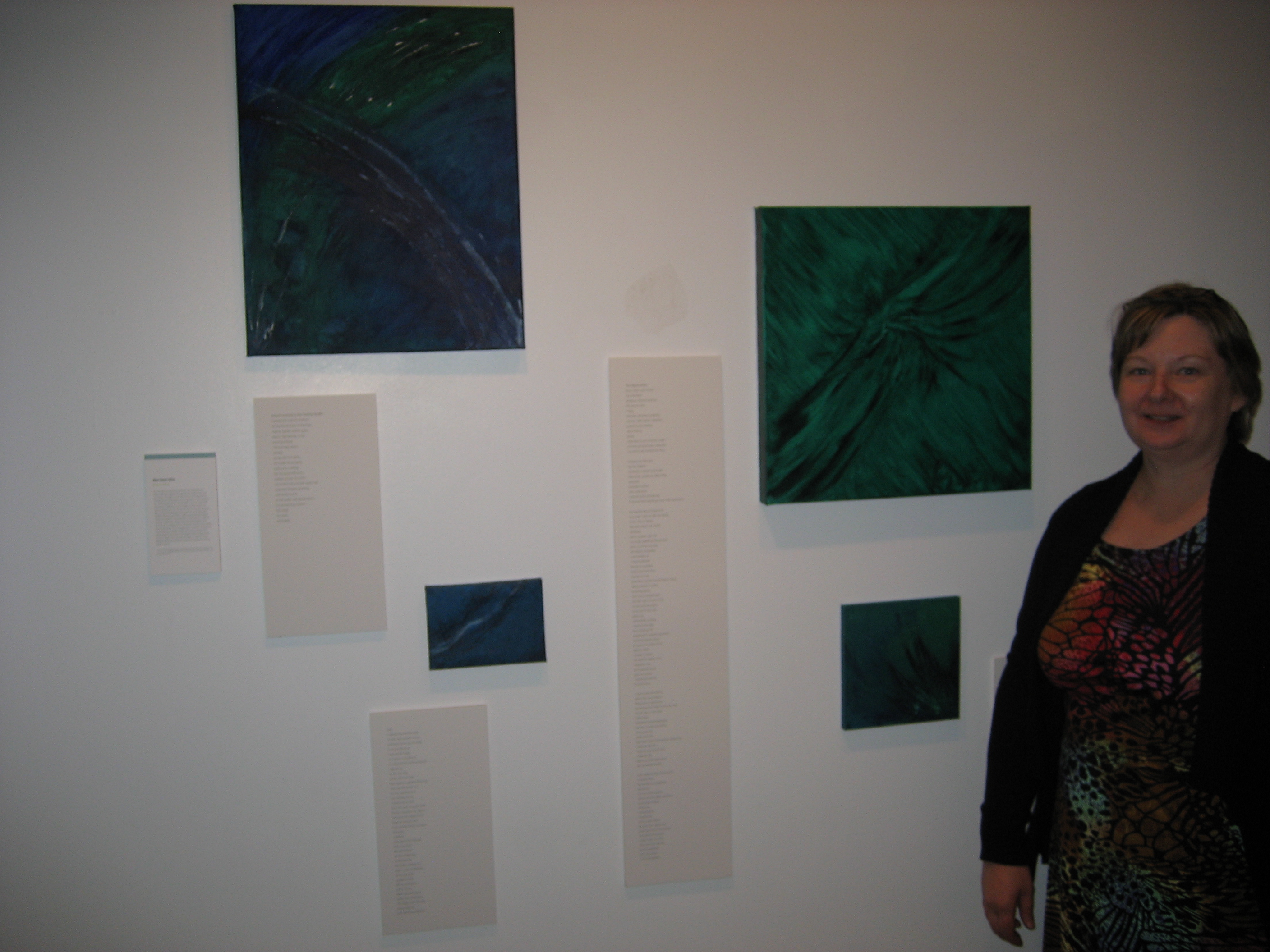
013002Ventured to Edmonton with one of my sons on Thursday evening to attend the opening reception of the InSight 2 – Engaging the Health Humanities International Exhibition. So exciting to see my paintings and poems displayed alongside so many other intriguing exhibits by talented artists and health professionals.

When we first arrived, we wandered though the UofA (Fine Arts Building) FAB Gallery viewing all the work, but admittedly my eye was on the look out for my exhibit. I was a little panicked when I thought we’d been through it all and I could not find my paintings / poems, then I remembered we had not been to the very first area near the entrance…..sure enough they they were! Whew. For a minute or two I did think it really all had been just a dream!

I was also thrilled to read some of the same thoughts I had expressed in my initial submission, and 150 word “abstract” about my exhibit, being expressed in the keynote speaker, Dr. Alan Bleakley’s introduction in the publication that is also part of this exhibition / symposium. As an advocate of the health humanities / arts and medicine working hand-in-hand, he readily acknowledges that there can be “well-being without being well.”

I was so grateful to be able to attend the reception to see my “Blue-Green Elixir” up on the FAB 011012Gallery wall, being visited by fellow artists, writers, doctors, health professionals, students, and the public at large. Thank you so much to Graeme for ensuring I made it to the reception, and Shannon who was very much with me in spirit every step of the way! Love you both for knowing how important this was to me, without me having to tell you!

“Blue-Green Elixir” at InSight2 starting May 14, 2013!

 I am excited to announce, starting tomorrow I will have an exhibit of 4 poems and 4 abstract paintings in the “InSight2 – Engaging the Health Humanities” exhibit at the University of Alberta FAB (Fine Arts Building) Gallery in Edmonton. InSight2_Invite_digitalThe gallery is closed Sunday / Monday / Holidays and open Tuesday to Friday 10-5 and Saturdays 2-5. This is the first ever exhibit and publication of my work. I am happy to share with you the following abstract describing my work:

“Blue-Green Elixir”   It is my aim to express creatively my experiences, thus making tangible through artistic expression my emotions, thoughts, and memories involving illness. The work is a sampling of documentation of my search for “well-being”, when “being well” is not an expected outcome. In addition to the insight producing the art has provided me, it is my desire that it may also provide the community at large, other patients, and especially health professionals, with insight and understanding of what one patient may experience during their medical journey.  Improved mental well-being throughout the course of incurable, chronic illnesses has become viable for me because of my engagement in artistic endeavors. Hopefully my positive experience will resonate with other patients, and also encourage health professionals, if not to “prescribe” at least perhaps to “advise” their patients of the possibilities of art and medicine working hand in hand.